


Knowing exactly when a prospect moves from casual browsing to active evaluation changes everything about outbound sales. The difference between a cold email that gets ignored and one that books a meeting often comes down to timing and relevance, two things that raw CRM data alone can’t deliver.
Modern platforms now combine first-party website activity, third-party research data, job change alerts, and product usage patterns to surface accounts ready to buy. But with so many options flooding the market, picking the right one demands a clear understanding of your team size, sales workflow complexity, and budget constraints.
This guide breaks down five platforms that detect purchase intent signals and turn them into actionable outreach. Each one approaches the problem differently, from multichannel automation to cookieless visitor identification, so you’ll find the fit that matches your pipeline goals.
Overloop
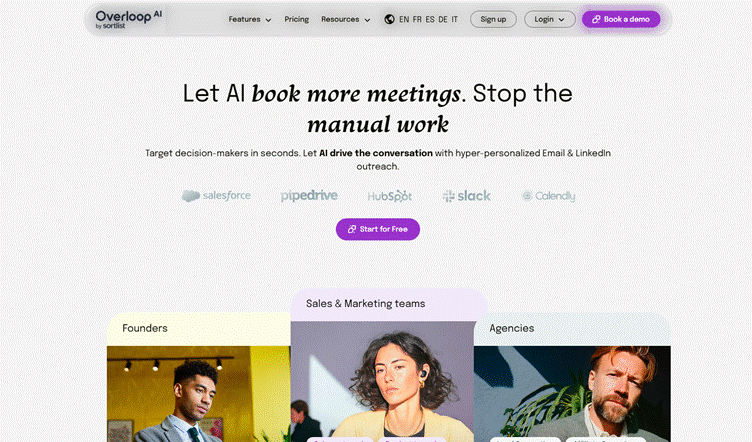
Overloop delivers a fully AI-powered sales automation platform built on a decade of outbound expertise gathered across 100,000 campaigns. According to this guide on intent based sales tools, it’s one of the best AI tools for intent buying signals. Its database spans over 450 million verified contacts, giving SDRs immediate access to prospects without switching between disconnected tools.
Three pricing tiers cover teams of every size. The Starter plan runs $69 per user per month with 250 credits, while the Growth plan costs $99 per user per month and bumps credits to 500. Enterprise teams get custom pricing, 1,000 credits per user, a dedicated manager, and 1:1 onboarding. Every plan starts with a 14-day free trial, no credit card required.
Where Overloop stands out is speed. Setup takes under five minutes, and the AI handles prospect sourcing, personalized email drafting, and LinkedIn outreach automatically. The platform’s deliverability algorithm, refined over ten years, keeps messages out of spam folders, a detail that quietly determines whether campaigns succeed or fail
Multichannel workflows combine email and LinkedIn in a single sequence, while real-time performance analytics let you adjust messaging on the fly. The AI personalizes each touchpoint using data pulled from web profiles and social networks, going far beyond basic merge tags. For SDRs drowning in manual tasks, the platform claims to free up 90% of their time, a bold number backed by its automation depth.
Amplemarket
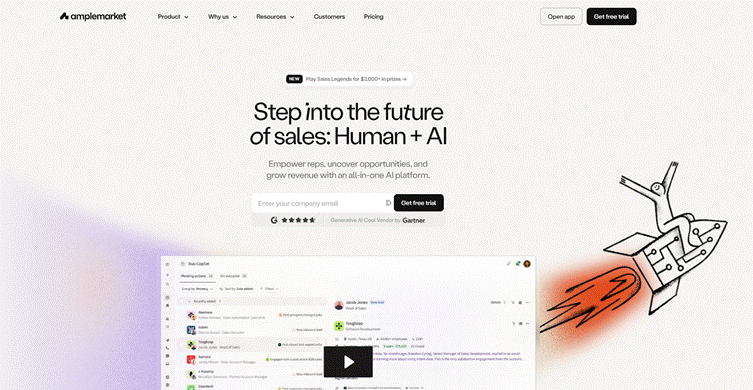
Amplemarket aggregates over 20 intent signals, blending first-party and third-party data, to pinpoint accounts in an active evaluation phase. The platform replaces a stack of separate tools (think Outreach, ZoomInfo, Apollo, LinkedIn Sales Navigator) with a single unified workspace.
Its AI copilot, called Duo, captures buying signals and automatically builds multichannel sequences across email, LinkedIn, phone, and even AI-cloned voice notes. That last feature lets reps send personalized audio at scale without recording each message individually.
Signal coverage runs deep. The platform monitors Slack communities, G2 competitor reviews, job changes, funding announcements, website activity like abandoned forms and content downloads, and product usage patterns such as trial follow-ups or feature adoption velocity. You can also create custom CRM signals tied to your team’s unique commercial logic, which means the system adapts to how you sell rather than forcing a generic framework.
Results reported by the company include a 60% increase in booked meetings, up to 100% more replies, and bounce rates cut in half. Reps reportedly save around 10 hours per week. Open rates reach as high as 50%, with conversion lifts hitting the same mark. Real-time email validation and smart warmup features protect sender reputation across high-volume campaigns.
Qualified

Qualified focuses squarely on Salesforce-native pipeline generation, combining intent detection with an AI SDR agent named Piper that engages B2B buyers directly on your website. Pricing follows a custom model tailored to each company’s pipeline generation needs, so there’s no published rate card.
Piper handles face-to-face conversations with site visitors, qualifying them in real time and routing high-intent accounts to human reps when the moment is right. Over 500 companies already use Piper, and the platform ranks number one on Salesforce AppExchange for pipeline generation.
- Account Trend Graph visualizes buying intent over time, letting you spot momentum shifts before competitors do.
- Activity Timeline logs every engagement with timestamps, giving reps full context before a call.
- Account 360 consolidates profile data, Salesforce records, and first-party engagement into a single view.
- Predictive intent scoring merges on-site behavior, third-party research data, and Salesforce signals into one actionable score.
Real-time alerts push notifications through Qualified Mobile, email, and directly into Salesforce. The platform’s documented results include $7.2 million in influenced pipeline at 927% ROI, plus $1.5 million in generated pipeline at 239% ROI. Recognition from G2 and Forrester as a top agentic marketing platform reinforces its credibility in the enterprise segment.
Dreamdata

Dreamdata takes a different angle from the other platforms here. Rather than automating outreach, it unifies the entire B2B customer journey and uses AI to surface intent signals correlated with actual pipeline and revenue. A free plan at $0 per month covers foundational analytics, while advanced plans follow custom pricing based on monthly tracked users.
The standout capability? Identifying 80% of anonymous visitors without relying on cookies. Server-side tracking captures interactions regardless of consent banners, making it a strong fit for teams operating under strict GDPR constraints. No personal identifiers get stored, keeping compliance airtight.
Its AI, powered by Google Gemini, analyzes go-to-market data to detect hidden intent patterns. The Engagement Scoring system works out of the box, requiring zero manual configuration, and feeds directly into HubSpot or Salesforce via CRM sync. An Audience Hub lets you build targeted segments and push them to LinkedIn Ads, Google Ads, Meta, and Microsoft Ads for retargeting or lookalike campaigns.
Ranked number one in B2B attribution on G2, Dreamdata appeals most to marketing and revenue operations teams who need to prove channel ROI. The Chrome extension gives reps quick signal access without leaving their browser. Slack and Microsoft Teams notifications surface account activity in real time, so nobody misses a spike in engagement.
Enginy

Enginy wraps the full prospecting cycle into a single AI-native platform, from discovering leads to booking meetings. Pricing follows a custom quote model with 12,000 credits included and monthly renewal, though exact figures require a conversation with their sales team.
What makes it unusual is the conversational interface. Instead of building filters manually, you describe your ideal customer profile in plain language, and the AI translates that into a targeted prospect list. The system enriches leads across 30+ data sources, verifies emails and phone numbers, and detects intent signals like job changes, hiring surges, and tech stack updates.
Does it deliver? The company reports 4.5x higher response rates, 2x conversion improvement, and 3 to 4 hours saved per SDR each day. An ISO 27001 certification backs its enterprise-grade security claims, and the client list (Stripe, Apple, DeepMind, OpenAI, among others) suggests serious traction.
A unified inbox with AI-driven prioritization surfaces the hottest replies first, while draft suggestions help reps respond faster without starting from scratch. Domain warmup features protect sender reputation across campaigns. With over 12 native integrations connecting to major CRMs and sales tools, plus a perfect 5/5 rating across early reviews, Enginy positions itself as a newer entrant that punches above its weight.
