


Every website owner wants to make money from their traffic. But how much traffic does a website need to make real money?
This article will answer your question. It will also show you how traffic affects earnings and how to boost your website traffic.

Try Kamatera's VPS Hosting Free Trial
Understanding Website Traffic and Its Importance (Quick Answer)

A website needs 10,000 to 50,000 monthly visitors to make real money, defined as $1,000 to $5,000 per month. But, this can vary depending on factors like:
- Website Niche (finance and health niches can earn more with less traffic)
- Monetization methods (affiliate marketing can be more profitable than ads)
- Audience quality (engaged visitors from high-income countries are more valuable)
- Content quality and conversion optimization

Some examples:
- A niche site with 10,000 monthly visitors might earn $1,000+ through affiliate marketing
- A general blog with 50,000 monthly visitors could make $1,000-$2,000 from display ads
- A high-value niche site with 30,000 visitors might earn $5,000+ from a mix of affiliates and ad networks
Remember, these are rough estimates. Some sites make more with less traffic. In contrast, others struggle even with higher numbers.
Overall website traffic is crucial for online business. It shows how many visitors visit your site. Monthly unique visitors, monthly page views, and sessions often measure this. Each of these marketing metrics shows your site’s performance and profit potential.

What is Website Traffic?

Website traffic refers to the number of visitors that land on a website. It includes all user activity, measured through page views, clicks, and sessions.
The correlation between traffic and earning potential is undeniable. More visitors generally translate to increased opportunities for ad revenue generation.
Yet, it’s crucial to understand that not all traffic is created equal. For monetization, traffic quality matters more than its quantity.
High-quality traffic includes visitors truly interested in your content or products. They are more likely to click ads, buy, or sign up for newsletters. Thus, a few high-quality visitors can earn more than many low-quality ones.
The Difference Between Targeted and General Traffic
- Targeted Traffic: This group converts better. They’re interested in what you offer. For example, someone searching for the “best digital marketing course” is more likely to buy it if you sell that course. This is more likely than a random visitor from a viral post.
- General Traffic: It boosts visibility and brand awareness but rarely converts to sales. Some general traffic is good for exposure. Yet, focusing on targeted traffic is key for better sales.

Traffic Sources and Their Value

The source of your traffic plays a significant role in its monetization potential. Organic traffic, derived from search engines, often proves the most valuable. These visitors usually have high intent. They seek information or solutions related to your content.
Social media traffic varies in revenue quality. It can attract visitors but not all are valuable. While referral traffic from trusted sources leads to better interaction and monetization.
Direct traffic, where users type your website URL, usually comes from high-value audiences and is profitable.
Factors Affecting Website Earnings
Several key factors influence your website’s earning potential, extending beyond mere traffic numbers. Understanding and optimizing these elements can significantly impact your revenue streams.
Niche Selection

Your niche is key to your earnings. Sectors like finance, insurance, and law offer high pay. They attract better ads and affiliate deals. However, these fields are competitive. You need knowledge and marketing skills to succeed.
The competitive landscape within your niche affects your ability to attract and monetize traffic. A less saturated niche might offer easier entry but potentially lower earnings.
A highly competitive niche could offer higher income. But, it would need more resources to stand out. If you decide to take this route, make sure to check out these tips for affiliate marketing success in a competitive market. Your niche’s audience affects monetization. Niches with wealthier audiences earn more. Knowing your audience’s needs, preferences, and buying habits is key.
Focusing on your target audience helps you craft better content and strengthen relationships. This, in turn, boosts conversion rates and earnings.
Geographic Location of Visitors

The origin of your traffic affects your earnings. For example, the US, Canada, UK, and Australia offer higher ad space rates and affiliate commissions. This is due to their higher consumer spending and competitive advertising space revenue.

However, don’t just focus on these markets. Emerging markets with growing online populations also present opportunities. Early establishment in these markets can be particularly rewarding.
Traffic Quality
When monetizing, traffic quality is more important than quantity. Metrics like time on site and pages viewed show audience interest. Visitors who linger and explore are more likely to click ads or buy.
Bounce rate, the percentage of one-page visitors, also affects earnings. A high bounce rate suggests your content or design may need work. Lowering the bounce rate can boost engagement and, in turn, earnings.
Monetization Methods

Your monetization methods affect the traffic you need for good income. Advertising networks are easy to set up but require a lot of traffic. On the other hand, affiliate marketing can be more profitable with less traffic, especially for high-priced items.
Sponsored content can be profitable with low traffic if the audience is engaged and specific. The same goes for digital products or services. They can also succeed with minimal traffic, as long as the audience is loyal and interested.
Your website’s money-making method greatly affects the traffic needed for good income. Common methods include:
- Affiliate marketing: Earning commissions by referring customers to partners’ products or services.
- Display ads: Generating income by showing ads on your site (e.g., Google AdSense).
- Selling products or services: Offering digital or physical products, courses, or consulting.
- Sponsored content: Getting paid to write content that promotes brands or products.
- Memberships or subscriptions: Offering premium content to paying subscribers.

Calculating Your Traffic Needs
To meet your income goals, you must estimate the required total traffic. This requires understanding key metrics and doing some basic calculations.
Understanding RPM (Revenue Per Mille)
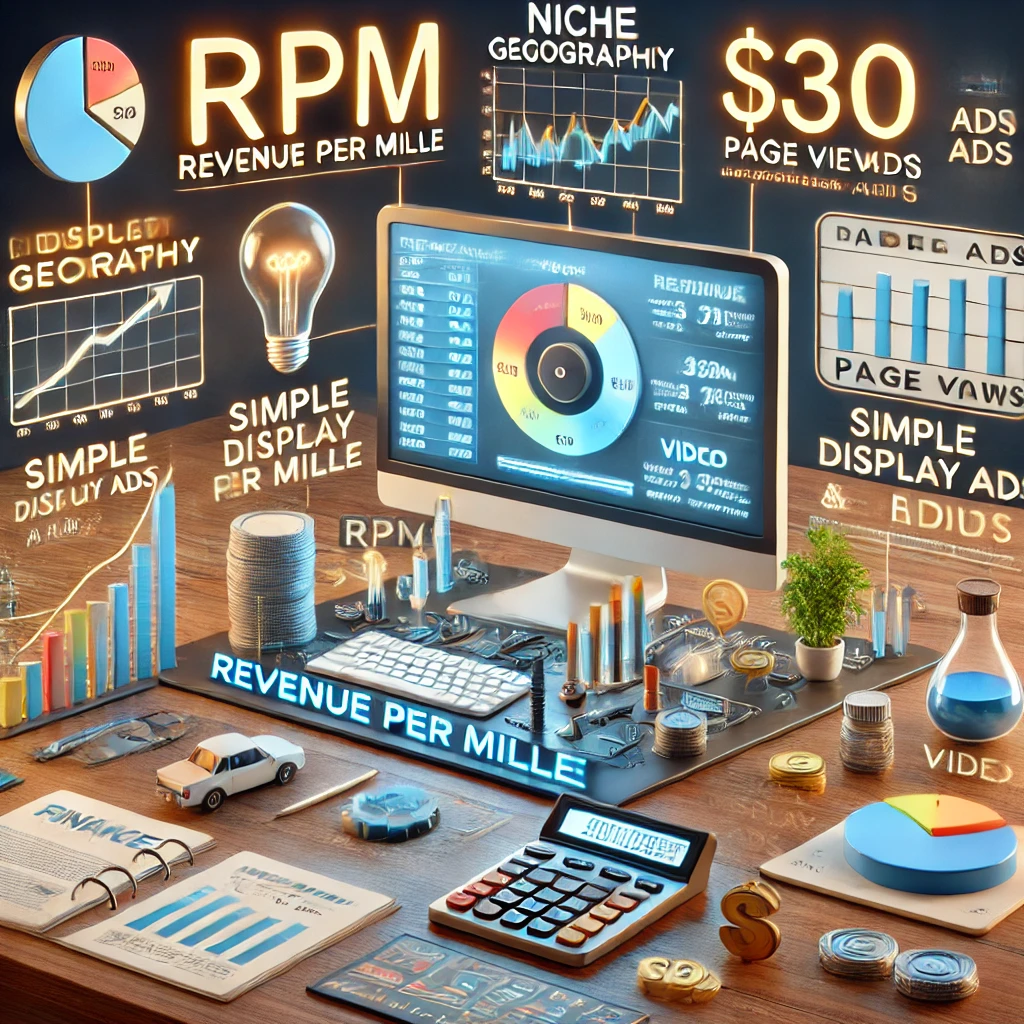
Revenue Per Mille is the earnings generated per 1,000 page views. This crucial metric helps gauge your website’s monetization efficiency.
Tracking RPM helps you find which content, traffic sources, or users make the most money. This helps you improve your monetization strategy.
It helps to compare earnings across different traffic channels and content types.
Calculate your RPM by dividing your total earnings by the number of page views, then multiplying by 1,000. Formula: RPM = (Estimated earnings / Number of page views) * 1000.
Average RPM varies significantly across niches. A general interest blog might see RPMs of $5-$10. But, niche sites in lucrative fields like finance or health can get RPMs of $30 or more.
In addition, there are several factors impact your site’s RPM, including:
- Niche: Specialized fields, like finance, law, or tech, often pay more than general topics.
- Geography: Visitors from the U.S., U.K., and Canada usually generate higher earnings due to better ad markets.
- Traffic Source: Organic search traffic, from users actively seeking information, typically earns more. In contrast, social media traffic, from passive users, earns less.
- Ad Placement and Formats: Ads in visible, engaging areas boost clicks and earnings. Moreover, interactive or video ads outpace simple display ads in revenue.
Estimating Required Traffic Based on RPM

To estimate the traffic needed to reach a specific income goal, use this traffic calculator formula: (Desired Daily Income / RPM) * 1000. For example, if your goal is $100 daily and your RPM is $10, you’d need approximately 10,000 daily page views.
Consider various scenarios to set realistic expectations. If you’re in a high-paying niche with an RPM of $30, you might only need about 3,333 daily page views to reach $100.
Conversely, in a lower-paying niche with an RPM of $5, you’d need 20,000 daily page views for the same income.
To boost your site’s RPM, consider these strategies:
- Optimize Ad Placement: Put ads in visible areas, like the top or within content, to boost clicks.
- Increase User Engagement: Create content that keeps visitors longer. This raises ad views per session and boosts RPM.
- Target High-Value Keywords: Focus on keywords in profitable niches with high CPC. This significantly increases RPM.
- Experiment with Ad Networks: Different networks offer various RPMs. Try Google AdSense, Media.net, or AdThrive to find the best revenue.
Accounting for Seasonal Changes

Website traffic and earnings often change with the seasons. For example, many niches see a boost during the holidays. However, summer might bring a drop. Knowing these patterns is key to setting realistic income goals.
To keep income steady, even in off-seasons, diversify. Add different content and income sources. If your main niche slows down in summer, create summer-friendly content. Also, multiple income streams can help balance earnings year-round.
Regularly check your RPM. It varies with seasons, ad availability, and visitor behavior. Tracking RPM trends shows when to update content, change ads, or try new revenue methods.
By managing your RPM, you can better estimate the traffic needed to meet your revenue goals. This will improve your website’s profitability.

Traffic Requirements for Different Income Levels
Knowing traffic needs for different income levels helps set achievable goals in online ads. Each monetization method requires a specific traffic level to earn. Understanding these benchmarks lets you adjust strategies.
So, match traffic goals with income dreams for a better plan. This approach boosts your website’s growth and online advertising potential.
Making Your First Dollar Online
Starting to make money online often begins with earning your first dollar. You can achieve this with little traffic, but it varies by niche and strategy.
Some bloggers do it with just 100 monthly visitors, often through affiliate marketing or niche services directly.
To earn well with low traffic, choose the right niche and method. For instance, promoting costly affiliate products in a specific niche can yield earnings, even with few visitors.
Also, freelance services related to your blog can attract customers, even with low traffic.
Reaching $100 per Day

Many website owners strive to earn $100 daily. The required traffic, however, depends on the niche and monetization method. Successful bloggers usually draw between 1,000 and 5,000 visitors each day to meet this goal.
For example, a finance blog earning $20 per 1,000 views could make $100 daily with 5,000 views. Meanwhile, a general blog with a $5 RPM would need 20,000 views to earn the same.
Bloggers use various methods to earn the same income. Some rely mainly on display ads. Others mix in affiliate marketing, sponsored posts, and selling digital products.

| RPM | Traffic Required to Earn $100/day |
| $5 | 20,000 daily page views |
| $10 | 10,000 daily page views |
| $20 | 5,000 daily page views |
| $30 | 3,333 daily page views |
Scaling to a Full-Time Income
To make your website a full-time income source, aim for 10,000 to 100,000 monthly visitors. The exact number depends on your niche, audience, and monetization methods.
At this point, it’s crucial to diversify your income. Relying only on display ads demands much more traffic. For instance, a mix of affiliate marketing, online courses, and ads might need just 30,000 visitors. However, relying solely on Google Adsense could require over 100,000 visitors each month.
For more insights, check out our guide on how to make money with a website without selling anything.
Monetization Strategies and Their Traffic Requirements
Different monetization methods have varying traffic requirements for profitability. Understanding these differences helps in choosing the most suitable SEO strategies for your current traffic levels and future goals.
Display Advertising
Display Advertising relies on high traffic volumes to generate income. For example, Google Adsense allows participation at any traffic level, while Mediavine requires at least 50,000 monthly visits. Earnings per 1,000 views (RPMs) can range between $2 and $30+, with niches like finance and technology performing better. Boosting engagement and optimizing ad placements can improve RPMs without needing more traffic.
Affiliate Marketing

Affiliate marketing can be profitable with low traffic, especially for high-priced items. Success relies on targeted traffic and trust. Key factors include conversion rates and commission percentages.
Digital products often offer commissions of 50% or more. In contrast, physical products have lower rates. Personalized links or discount codes can boost earnings.
Sponsored Content
Sponsored content doesn’t always need high traffic. Brands often prefer engaged audiences. Niche blogs with fewer, active visitors can get better deals than larger, less-engaged ones.
For blogs with 25,000-50,000 monthly views, rates range from $250 to $500 per post. In high-demand niches, prices can exceed $1,000.
Read more about monetizing your blog posts:
Digital Products and Services

Digital products and services allow for profitability with minimal traffic if the audience is loyal. A niche site with just 5,000 monthly visitors could sell a $100 course and generate $10,000 if 2% of the visitors purchase.
Coaching or consulting services can also yield high returns. Building authority in a niche and employing email marketing are key success factors.
| Monetization Method | Traffic Requirement | Potential Earnings |
| Display Advertising | High traffic required (e.g., 50,000+ for Mediavine) | $2 to $30+ per 1,000 views, varies by niche |
| Affiliate Marketing | Low traffic can work if targeted | Physical products (a few %) vs. digital products (up to 50%+), conversion rate important |
| Sponsored Content | Low traffic, if the audience is engaged | $250-$500 per post (25,000-50,000 views), $1,000+ in high-demand niches |
| Digital Products & Services | Low traffic, but requires a loyal audience | Can generate thousands per month (e.g., 2% conversion of 5,000 visitors = $10,000) |
Learn our expert tips on how to sell digital products and maximize your online income!
Optimizing Your Website for Better Monetization
Maximizing your website’s earning potential involves more than just increasing traffic. Optimizing various aspects of your site can significantly boost your monetization efforts.
Improving User Experience
User experience plays a crucial role in website monetization. A site that’s easy to navigate and pleasant to use encourages visitors to stay longer and explore more content, increasing the chances of average click-through rate or purchases.
- Site speed is crucial. Slow pages frustrate users and increase bounce rates. Aim for load times under 3 seconds to keep visitors.
- Mobile responsiveness is also key. More web traffic comes from mobile devices. Ensure your site works well on all screen sizes.
- Clear navigation helps users find what they need quickly. This boosts the chances of conversions. Create a logical menu and use internal links to related content. This improves user experience and spreads link equity, boosting SEO.
- Add feedback tools like surveys or comment sections. They help you understand visitor preferences better. By continuously improving the user experience, you can boost site traffic and enhance monetization.
You might like to find out how to add Google reviews to your website.
Content Strategy

Creating valuable, timeless content is key to making money online. This content stays relevant, drawing traffic and income over time.
First, do keyword research to find popular topics with low competition. Use tools like Google Keyword Planner, Ahrefs, or SEMrush. Focus on long-tail keywords. They are specific and often lead to more sales.
Next, optimize your content for SEO. Include keywords in titles and text. But, prioritize readability and value over keyword frequency. Also, create content that answers user questions. This boosts your search engine ranking.
By focusing on quality and detail, you improve user experience. This, in turn, increases traffic and revenue.

Conversion Rate Optimization
Boosting conversion rates can increase earnings without more traffic. Use A/B testing to find the best spots for ads on your site. Try different ad sizes and formats to see what fits your layout and audience.
For affiliate marketing, fine-tune link placement and calls to action. Experiment with product reviews, comparison posts, and resource pages. This helps find what your audience likes. Use clear, compelling calls to action that encourage clicks without being pushy.
If selling digital products or services, optimize your sales funnel. Improve product pages, make checkout easier, and use email marketing to nurture leads.
Tracking and Analyzing Your Progress
To earn money from your website, you must constantly track your website’s performance. By watching key metrics, you can make decisions that boost your earnings.
This process shows what’s working and what’s not. It allows you to quickly adapt to changing trends and audience preferences.
Essential Metrics to Check

To earn money from your website, it’s crucial to continuously track its performance. By monitoring key metrics, you can identify what works and make informed decisions that drive higher earnings.
This allows you to adapt quickly to changing trends and audience preferences, ensuring your strategies remain effective.
Key metrics to check include:
Traffic sources
Understanding where visitors come from is key. Focus on channels that bring valuable traffic. Check both search volume and user engagement, like time on site and conversion rates.
Revenue per visitor (RPV)
This metric shows how much each visitor contributes to your earnings. Calculating RPV over time helps evaluate the effectiveness of your monetization strategies.
Conversion rates
Track conversions, like ad clicks, affiliate links, and purchases. It helps optimize earnings. Low conversion rates may point to issues with content, offers, or user experience.
Using Web Analytics Tools
Google Analytics is a leading tool for website analysis. It helps you decide where to invest. By setting goals, like tracking sign-ups or purchases, you can know how well you spend money on your site. The behavior flow report shows how users move through your site. This helps you spot drop-off points and areas to improve.
Tools like Hotjar and Crazy Egg offer visual insights into user behavior. They show which parts of your pages attract the most attention. This data is crucial for improving ads and calls to action. It helps you spend your budget more wisely.
Regularly checking your analytics for trends and problems is key. It helps you spot growth opportunities.
For example, if a blog post gets more traffic, create similar blog post content to leverage that interest. On the other hand, look at underperforming pages to find issues. Check for high bounce rates, low time on the page, or poor conversions.
Understanding why some pages fail helps you improve. You might update content, enhance SEO, or better the user experience.
Case Studies: Real-World Examples of Traffic and Earnings
Real-world examples show the link between traffic and earnings in different cases. They provide valuable insights.
Low-traffic, High-Earning Sites

Some websites earn well with low traffic by targeting profitable niches and using smart monetization. For example, a B2B software review site might get just 10,000 visitors a month but still make over $5,000. It does this through high-paying affiliate links and sponsored posts.
Success often comes from picking the right niche and attracting the right audience. These sites offer expert content that, while aimed at a small group, is very engaging and valuable.
To achieve similar success, find underserved niches with high earning potential. Build your expertise and create content that meets your audience’s needs.
High-Traffic, Moderate-Earning Sites
Some websites get a lot of visitors but make little money. For example, a blog with 500,000 views a month might only earn $2,000 to $3,000. This often happens when relying on low-paying ads.
These sites struggle to match their earnings with their traffic. They often target broad, low-paying areas or stick to one method, like display ads.
To boost earnings, focus on different audience segments. Tailor marketing strategies for each segment. Consider adding income sources like affiliate marketing, sponsored posts, or digital products.
Improving RPM often means refining your content marketing strategy. Target higher-value keywords and topics in your niche.
Additionally, work on improving user engagement metrics. They include time on site that is how long visitors stay on each page. Such metrics can lead to better ad performance and increased affiliate conversions.
Conclusion
To make real money from a website, focus on attracting high-quality, engaged visitors in high-paying niches. Diversify income streams and optimize your RPM to reduce traffic dependency. Use your traffic well. Choose the right monetization methods. They should match your traffic volume and audience engagement.
Start implementing these strategies today and watch your website traffic grow!

Next Steps: What Now
- Evaluate Your Niche – Assess whether your current niche aligns with lucrative opportunities. Find successful niches that could boost your earning potential.
- Focus on Traffic Quality – Shift your strategy towards attracting targeted traffic that converts.
- Optimize Monetization Strategies – Review your current monetization methods and explore other options.
- Enhance Your Content Strategy – Create high-quality content that engages your audience.
- Monitor Performance – Regularly check KPIs for better decisions.
- Test Monetization – Try methods like affiliate marketing or sponsored content.


