Best AI Agents for Ecommerce: Feature Overview
| Provider | Starting Price | Rating | Moneyback | |
|---|---|---|---|---|
![]() | A$8.06 | 30 Days | Visit Hostinger | |
![]() | A$23.35 | - | Visit Symphony | |
![]() | A$6.84 | 30 Days | Visit Bluehost | |
![]() | A$2.92 | 30 Days | Visit IONOS | |
![]() | A$3.27 | 30 Days | Visit HostGator | |
![]() | A$5.84 | 30 Days | Visit Kamatera | |
![]() | A$9.25 | - | Visit Contabo | |
| A$7.00 | 30 Days | Visit Ultahost | |
![]() | A$5.09 | 30 Days | Visit Hosting.com |
What Are AI Agents for Ecommerce?
AI agents for ecommerce are software systems that use artificial intelligence to perform tasks related to running an online store. Depending on their capabilities, they can answer customer questions, recommend products, update product information, monitor inventory, track orders, and support marketing activities. Unlike basic chatbots that mainly respond to specific questions, more advanced AI agents can plan tasks, use connected tools, and complete multi-step workflows with limited human input. Businesses can use ready-made platforms or build custom agents to reduce manual work, improve customer service, and manage daily store operations.
When to Choose and When to Avoid AI Agents for Ecommerce
| Reasons to Use AI Agents for Ecommerce | Reasons Not to Use AI Agents for Ecommerce |
| Your store receives more customer questions than your team can answer promptly. | Your store receives only a few orders and customer inquiries each week, so automation may not justify the cost. |
| You need to provide customer support outside normal business hours. | Your customers expect personal assistance for complex or sensitive purchases that AI cannot handle well. |
| You manage hundreds of products and need help writing descriptions, categorizing items, or updating listings. | Your product catalog changes rarely, making manual updates simple enough. |
| You want to automate order-status questions, return requests, and other repetitive support tasks. | Your store has complicated return policies or order exceptions that require frequent human decisions. |
| You need to analyze sales patterns, customer preferences, or product demand more quickly. | You lack reliable product, sales, or customer data for the AI to work with. |
| You want to coordinate marketing, inventory, and customer service through connected tools. | Your existing store software does not integrate with the agents you want to use. |
| You have clear procedures and approval rules for automated actions. | You cannot regularly review automated decisions or correct inaccurate responses. |
| You want to expand operations without hiring staff for every repetitive task. | Your budget cannot cover subscriptions, API usage, integrations, and ongoing maintenance. |
If AI Agents for Ecommerce Are Not Relevant to Your Needs, Consider These Alternatives
Traditional Ecommerce Automation: Traditional automation uses predefined rules to perform repetitive tasks, such as sending order confirmations, notifying customers about shipping updates, and generating low-stock alerts. It is suitable for businesses that need predictable results without the flexibility or cost of AI agents.
AI Chatbots for Ecommerce: AI chatbots answer customer questions, provide product recommendations, and help shoppers find information. They are a good option for stores that mainly want to improve customer communication without automating inventory, marketing, or other business operations.
Ecommerce Platforms with Built-In AI Tools: Some ecommerce platforms include AI features for writing product descriptions, generating marketing content, and improving product discovery. These tools suit merchants who want occasional AI assistance without managing a separate agent system.
Virtual Assistants and Human Customer Support: Human assistants can handle customer inquiries, process unusual orders, update product listings, and manage administrative work. This alternative is useful when tasks require judgment, personal communication, or careful handling of customer concerns.
Workflow Automation Software: Workflow automation tools connect applications and trigger actions when specific events occur. For example, a new order can trigger an entry in a spreadsheet, a notification to the fulfillment team, or an update in a customer relationship management system. This is a practical option for businesses with clear, repeatable processes.
How to Choose the Best AI Agents for Ecommerce
Choosing the right AI agent depends on your store’s size, the tasks you want to automate, your existing software, and your budget. Consider the following factors before committing to a platform.
- Identify Your Main Tasks: Decide whether you need customer support, product recommendations, inventory monitoring, order management, marketing assistance, or a combination of these functions. Choose a platform that addresses your most time-consuming tasks first.
- Check Ecommerce Integrations: Confirm that the agent works with your existing store platform, payment systems, inventory software, customer relationship management tools, and communication channels. Check whether the integrations are included or require paid subscriptions.
- Compare Automation Capabilities: Determine whether the platform only generates suggestions or can actually complete tasks. For example, an agent that drafts a product description is different from one that can update the listing after receiving approval.
- Review Security and Permissions: Choose a solution that limits access to sensitive information and allows you to control what agents can change. Require human approval for important actions, such as issuing refunds, changing prices, or modifying orders.
- Evaluate Accuracy and Human Oversight: Test the agent with real examples from your store. Check whether it provides correct product information, follows your return policy, and transfers difficult questions to a human representative.
- Understand the Full Cost: Compare monthly subscriptions, usage-based AI credits, API charges, integration fees, and implementation expenses. Estimate the cost of handling your expected workload rather than relying only on the advertised starting price.
- Check Scalability and Performance: Consider whether the platform can handle seasonal sales, larger product catalogs, and increases in customer inquiries. Test it during busy periods before relying on it for essential operations.
- Look for Reporting and Analytics: Choose a solution that shows completed tasks, errors, customer response times, and other useful measurements. These reports help you determine whether automation is saving time and improving the shopping experience.
- Test Before Full Deployment: Start with one low-risk workflow, such as answering common questions or drafting product descriptions. Measure the results, correct problems, and expand automation gradually.
-
Best Overall Hosting 2026
-
Users Top Choice 2026
-
Most Recommended NodeJS 2026
-
Best AI App Builder 2026
-
Top 5 Europe Web Hosting 2026

Hostinger provides website hosting, an AI-powered website builder, and tools that help online store owners create and manage their ecommerce websites. Its AI features can assist with product descriptions, website content, and store design, reducing the manual effort required to launch an online shop. For merchants exploring AI agents for ecommerce, Hostinger is a practical starting point, particularly when website creation and everyday store management are the main priorities. However, its built-in AI tools should not be confused with fully autonomous agents capable of independently managing every aspect of an ecommerce business.
Rating Overview
- Overall Score: 4.8
- Features: 4.8
- Reliability: 4.7
- User-Friendly: 4.9
- Support: 4.7
- Pricing: 4.8
Detailed Analysis
Performance: Hostinger combines website hosting with AI-assisted content creation and ecommerce functionality. Merchants can use these tools to prepare product pages, display products, and accept orders. Store owners should review the resources, backup options, and performance limits included in their chosen plan, especially when expecting heavy traffic during promotions. More complex workflows, such as coordinating inventory across multiple sales channels, may require additional integrations.
Support: Hostinger provides customer support for hosting and website-related questions. Ecommerce merchants should check the support options included with their selected plan and confirm whether assistance is available for third-party AI tools and integrations.
Security: Hostinger’s hosting environment provides a foundation for operating an online store. Merchants should review the security features, backup provisions, and other protections included in their selected package. They should also follow secure account-management practices and ensure that any connected ecommerce or AI services are configured appropriately.
Pricing: Hostinger offers multiple hosting and website-building plans for different budgets. The overall cost depends on the selected package, renewal rates, and any additional AI services or ecommerce integrations. Merchants should compare current plan terms and recurring costs before committing.
Ease of Use: Hostinger’s website builder and guided setup process make it accessible to merchants without coding experience. AI-generated content provides a useful starting point for product descriptions and store pages, while the integrated website-building tools help simplify the launch process. Users seeking advanced AI agent automation may still need external tools.
Pros and Cons
- AI assistance for website creation and content generation
- Beginner-friendly tools and guided setup
- Ecommerce functionality within its website-building ecosystem
- Multiple hosting plans for different budgets
- Advanced AI agent workflows may require external tools
- Available features depend on the selected plan

Symphony by Wix helps businesses coordinate AI agents that handle tasks across different business tools and sales channels. Rather than relying on one assistant for every task, merchants can use a team of agents to support marketing, customer communication, business planning, and daily operations. Its free plan, described as offering 500 monthly AI credits with a limit of 100 credits per day, provides an opportunity to test its capabilities before paying. For ecommerce businesses managing repetitive work across multiple platforms, Symphony offers a central way to coordinate tasks. Available functions depend on connected tools, permissions, and the selected plan.
Rating Overview
- Overall Score: 4.7
- Features: 4.9
- Reliability: 4.6
- User-Friendly: 4.7
- Support: 4.5
- Pricing: 4.8
Detailed Analysis
Performance: Symphony’s multi-agent approach allows agents to share business context and work across connected tools, including storefronts, social accounts, inboxes, and customer relationship management systems. This can help ecommerce teams coordinate marketing and customer communication while reducing the need to switch between applications. Actual performance depends on the available integrations, agent capabilities, and connected services.
Support: Symphony provides product guidance and support options through its platform. Businesses should review the assistance available under their chosen plan, particularly when connecting external ecommerce services or troubleshooting multi-step workflows. Support requirements may increase as a store’s automation setup becomes more complex.
Security: Symphony’s connected-tool approach makes permissions and access management important considerations. Merchants should review the permissions granted to each agent and ensure that connected accounts expose only the access needed for assigned tasks. Important customer-facing actions and changes to business data should be monitored to reduce the risk of unintended outcomes.
Pricing: Symphony’s free plan is described as providing 500 monthly AI credits, with a daily limit of 100 credits. Paid plans offer higher credit allowances for businesses that need more frequent agent activity. Since complex tasks can consume more credits, merchants should evaluate their expected usage and confirm current plan limits before relying on the platform for daily operations.
Ease of Use: Users can describe business goals through conversational prompts instead of configuring every workflow manually. This makes Symphony approachable for merchants who want to experiment with AI agents. However, connecting external tools and understanding credit consumption may require some initial setup and ongoing attention.
Pros and Cons
- Coordinates multiple AI agents for business tasks
- Connects with different business tools and platforms
- Free plan available for testing
- Conversational task management
- Supports marketing and customer communication workflows
- Credit limits can restrict frequent use
- Some integrations require additional setup
- Results depend on connected services and agent permissions
-
Top 10 WordPress Hosting 2026
-
Top 10 Website Builder 2026
-
Over 99% Uptime 2023
-
Top 25 WordPress Hosting 2023

Bluehost AI Store combines ecommerce website creation with AI agents designed to help merchants manage products, orders, inventory, and customer information. Users can describe their business in everyday language and receive assistance building a storefront, configuring selling features, and handling routine tasks through conversational instructions. Hosting and ecommerce functionality are included, reducing the need to assemble a store from separate services. Specialized agents, including Catalog, Order, Inventory, Customer, and Coordinator Agents, focus on different areas of store management. This makes Bluehost a compelling option for entrepreneurs seeking more than a basic AI tool for writing product descriptions.
Rating Overview
- Overall Score: 4.9
- Features: 5.0
- Reliability: 4.8
- User-Friendly: 4.9
- Support: 4.8
- Pricing: 4.7
Detailed Analysis
Performance: Bluehost AI Store provides specialized agents for product catalog updates, order tracking, inventory monitoring, customer insights, and task prioritization. Its ecommerce functionality also supports essential selling activities, including payments, shipping, product search, and checkout. By bringing these capabilities together, the platform can help merchants manage routine operations from one place. Businesses with complex workflows should confirm that the available tools meet their specific requirements.
Support: Bluehost advertises round-the-clock human support, offering assistance to users who need help setting up or maintaining their online stores. This can be valuable for new merchants who are unfamiliar with ecommerce platforms. Users should confirm which support channels and services are included with their selected plan.
Security: Bluehost’s AI Store offering includes hosting, SSL, security features, and weekly backups, according to the supplied plan information. The provider also advertises a 99.99% uptime commitment for shared hosting. Store owners should verify the applicable terms and maintain suitable backup practices while monitoring important payment, order, and customer-data workflows.
Pricing: Bluehost offers a 14-day free trial, followed by a Sell Online plan advertised at $15.99 per month. The package includes hosting and ecommerce features, but prospective customers should check current pricing, renewal terms, and the AI editing allowances available with the plan. Additional integrations or advanced requirements may increase overall costs.
Ease of Use: The conversational interface lets users request changes without manually navigating every setting. Beginners can start by describing their business and then refine the storefront as their needs evolve. The specialized agents also make it easier to approach different store-management tasks individually, although users should review automated actions before relying on them for critical operations.
Pros and Cons
- Dedicated agents for different ecommerce tasks
- Store creation through conversational prompts
- Hosting and ecommerce tools included
- Inventory and order management assistance
- Human support advertised around the clock
- Monthly AI editing limits may affect frequent users
- Advanced requirements may need additional integrations
- Current pricing and plan allowances should be verified
-
Best Value for Money 2026
-
Editor's Choice 2026
-
Most Recommened PHP Hosting 2026
-
Top 5 UK Web Hosting 2026
-
Top 5 Europe Web Hosting 2026

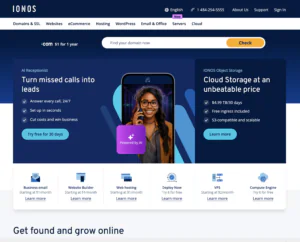
IONOS provides ecommerce website-building tools, hosting, and AI features that help businesses create and manage online stores. Its AI website generator can create an initial store layout with suggested text and images based on a short business description. Merchants can then add products, configure payment methods, manage orders, and organize shipping through the available administration tools. IONOS is suitable for small and medium-sized businesses that want to introduce AI into their ecommerce workflows without adopting a separate, complex automation platform. However, its AI-assisted store creation and content tools differ from dedicated multi-agent systems that independently coordinate inventory, customer service, and sales operations.
Rating Overview
- Overall Score: 4.6
- Features: 4.7
- Reliability: 4.8
- User-Friendly: 4.7
- Support: 4.7
- Pricing: 4.8
Detailed Analysis
Performance: IONOS offers AI-generated website content, product text and images, ecommerce management tools, payment integrations, and shipping options. Its marketing features can also help merchants monitor competitors and connect with social selling channels. These capabilities simplify several routine store-management activities, although businesses that require autonomous agents for complex workflows may need additional applications or integrations.
Support: IONOS provides customer assistance for its hosting and ecommerce services. This can help merchants resolve technical issues and manage their websites. Available support channels and service levels may vary by product and plan, so users should review the applicable terms before subscribing.
Security: IONOS provides hosting infrastructure and SSL encryption for ecommerce websites. These features help establish a foundation for secure online transactions and customer connections. Store owners should also review the backup arrangements and security protections included with their chosen package, particularly when their business depends on continuous access to product and order information.
Pricing: IONOS advertises introductory ecommerce pricing from $1 per month for certain offers. The final cost depends on the selected plan, promotional period, renewal price, and additional requirements. Merchants should compare the complete pricing terms and confirm which ecommerce and AI features are included before making a long-term commitment.
Ease of Use: The AI website generator helps beginners establish an online store without coding or advanced design knowledge. A central dashboard makes it easier to manage products and orders, while integrated tools reduce the need to switch between separate services. More advanced configurations may take time to learn, especially for merchants with specialized operational requirements.
Pros and Cons
- AI-assisted online store creation
- Integrated product, order, and shipping management
- Multiple payment options
- Marketing and social selling tools
- Entry-level plans for smaller businesses
- Advanced autonomous agent capabilities may require external tools
- Promotional pricing may increase at renewal
- Features and support options vary by plan
-
Top 10 Linux Hosting 2026
-
Top 10 Website Builder 2026
-
Great Support 2026
-
Excellent Service 2026
-
Over 99% Uptime 2026

HostGator provides web hosting and AI-assisted website creation tools that help businesses establish an online presence. Its AI website builder allows users to describe their business and generate an initial website without writing code, providing a starting point for a storefront concept. This can be useful for new merchants who want a simple website before investing in advanced ecommerce automation. However, HostGator’s AI website creation features should not be confused with a specialized AI agent platform offering dedicated systems for inventory monitoring, order coordination, and customer analysis. Businesses considering HostGator for AI-powered ecommerce should confirm which features are available in the specific product they intend to purchase, particularly because its older website-builder ecommerce offering is no longer available to new signups.
Rating Overview
- Overall Score: 4.2
- Features: 4.1
- Reliability: 4.5
- User-Friendly: 4.6
- Support: 4.5
- Pricing: 4.4
Detailed Analysis
Performance: HostGator’s AI website builder can generate a website from a written prompt and help users revise text, images, and design elements. Hosting included with the builder simplifies initial setup. Merchants requiring automated product updates, order tracking, or customer segmentation may need third-party ecommerce applications to support more advanced workflows.
Support: HostGator advertises 24/7 human support, which can be helpful when users encounter hosting issues or need assistance setting up a website. However, support for external AI tools and third-party ecommerce integrations may fall outside the standard service. Users should confirm the assistance available for their selected product.
Security: HostGator offers hosting services for business websites, but the protections available depend on the chosen plan. Ecommerce owners should review SSL availability, backup arrangements, and other security provisions before moving an established store. Businesses processing customer information should also ensure that their ecommerce applications follow appropriate data-protection practices.
Pricing: HostGator offers different hosting products and AI website-building options, with pricing and trial availability varying by product. Because included features and commercial terms may differ, prospective customers should check current pricing, renewal rates, and eligibility before committing. Merchants should also account for any additional applications needed to automate ecommerce operations.
Ease of Use: Prompt-based website creation reduces the need for coding and manual design work. Users can describe their desired website and refine the generated content, making the process approachable for beginners. This is useful for launching a basic business website, although managing more advanced ecommerce operations may require additional tools and setup.
Pros and Cons
- AI-assisted website creation
- Hosting included with the AI website builder
- Suitable for users without coding experience
- Round-the-clock customer support advertised
- Multiple hosting options
- Limited dedicated ecommerce agent functionality
- Older website-builder ecommerce plans are unavailable to new customers
- Advanced automation may require third-party applications
-
Best VPS Hosting 2026
-
Top 5 Europe Web Hosting 2026
-
Top 5 Australia Web Hosting 2026
-
Top 10 Best Gaming Hosting Provider 2026
-
Top 10 Reseller Hosting 2026

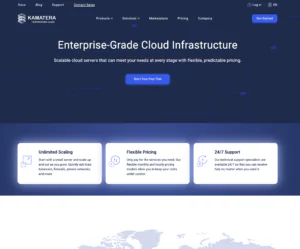
Kamatera is a cloud infrastructure provider that gives businesses the computing resources needed to deploy applications, databases, APIs, and AI-powered services. For ecommerce companies building their own AI agents, this flexibility is valuable because agents may need to process product catalogs, analyze customer behavior, answer support requests, or connect different store systems. Kamatera lets users configure cloud servers with different CPU, memory, storage, and operating system options, then adjust resources as demand changes. However, it is not a ready-made ecommerce AI agent platform, so merchants must supply or develop the software that performs these tasks. It is best suited to businesses that want greater control over the infrastructure supporting their AI workflows.
Rating Overview
- Overall Score: 4.6
- Features: 4.8
- Reliability: 4.8
- User-Friendly: 4.2
- Support: 4.7
- Pricing: 4.5
Detailed Analysis
Performance: Kamatera supports configurable cloud servers, scalable computing resources, networking, firewalls, and load balancers. These services can host AI applications, ecommerce integrations, vector databases, and automation tools. Businesses can tailor server resources to their workloads and expand capacity as needed. Actual performance depends on the selected configuration, application design, and software deployed.
Support: Kamatera offers technical support around the clock, which can help businesses troubleshoot server configuration and infrastructure issues. Customers remain responsible for deploying, maintaining, and securing their applications unless they arrange additional services. Teams without in-house technical expertise may need developer assistance to manage their AI systems effectively.
Security: Kamatera provides infrastructure features such as firewalls and configurable networking to help businesses manage access to their cloud environments. Ecommerce companies should also implement appropriate application security, access controls, encryption, and backup policies. Because customers manage their own deployed software, the overall security of an AI agent depends on both infrastructure configuration and application-level safeguards.
Pricing: Kamatera uses a flexible, usage-based pricing model that allows businesses to select resources according to their requirements. Costs depend on server size, storage, networking, and actual usage. Companies running AI workloads should monitor resource consumption and account for additional expenses such as backups, data transfer, and application management when estimating their budgets.
Ease of Use: Kamatera’s control panel allows users to create and manage servers and adjust resources as requirements change. However, deploying AI agents, connecting ecommerce platforms, and maintaining databases require technical knowledge. Businesses with development teams can benefit from this flexibility, while beginners may need professional assistance to implement their desired workflows.
Pros and Cons
- Flexible server configurations for AI applications
- Scalable computing resources
- Multiple geographic deployment options
- Infrastructure suitable for custom ecommerce integrations
- 24/7 technical support
- No ready-made ecommerce AI agents
- Requires technical knowledge to deploy and maintain applications
- Resource usage must be monitored to control costs
-
Top 5 Germany Web Hosting 2026
-
Top 10 VPS Hosting 2026
-
Top 10 Cloud Hosting 2026
-
Top 10 Dedicated Hosting 2026
-
Excellent Service 2026

Contabo provides VPS and cloud hosting services that businesses can use to run custom applications, databases, and automation software. For ecommerce companies experimenting with AI agents, its competitively priced server options can help reduce infrastructure costs while testing customer support assistants, product recommendation systems, and order-processing workflows. Rather than supplying ready-made ecommerce agents, Contabo provides the computing environment in which developers can install and operate their preferred tools. This makes it a practical option for startups and online retailers with technical support available who want greater control over AI infrastructure expenses. Businesses should select server resources carefully because AI workloads can consume substantial memory and processing power.
Rating Overview
- Overall Score: 4.5
- Features: 4.6
- Reliability: 4.5
- User-Friendly: 4.1
- Support: 4.2
- Pricing: 4.9
Detailed Analysis
Performance: Contabo offers VPS and cloud server configurations with different amounts of CPU power, RAM, and storage. These resources can support automation platforms, databases, API integrations, and self-hosted AI applications. Merchants can select software that fits their workflows instead of depending on a single built-in solution. Actual performance depends on the chosen configuration, application design, and resource demands of the AI workloads.
Support: Contabo provides customer support for its hosting services, helping users address hosting-related issues. Response times and the level of assistance may vary depending on the problem. Customers should also understand that application development, AI software configuration, and troubleshooting third-party tools may remain their responsibility.
Security: Contabo’s server infrastructure gives customers control over their installed applications and configurations. This flexibility requires businesses to manage operating system updates, access permissions, firewalls, and application security. Ecommerce companies should also implement reliable backups, protect customer information, and establish recovery procedures before using AI agents in critical store operations.
Pricing: Contabo is known for offering competitive prices relative to the server resources included in its plans. Costs depend on the selected configuration and billing terms. Businesses should also account for potential expenses such as backups, external AI APIs, software subscriptions, and additional resources needed as workloads grow.
Ease of Use: Server provisioning gives users considerable control over their computing environment, but deploying AI agents requires more technical knowledge than using a hosted ecommerce application. Beginners may need assistance with installation, updates, integrations, and security configuration. Businesses with development experience can benefit from the ability to customize their software stack.
Pros and Cons
- Competitive pricing for server resources
- Suitable for self-hosted automation software
- Multiple server configurations
- Control over installed applications
- Resources can be expanded as workloads increase
- Requires technical skills to manage AI applications
- Does not provide ready-made ecommerce AI agents
- Additional software and API costs may apply
-
Best Dedicated Hosting Provider 2026
-
Best Windows Hosting Provider 2026
-
Top 5 France Web Hosting 2026
-
Top 10 Website Builder 2026
-
Top 10 Web Hosting 2026

Ultahost offers VPS, dedicated server, and other hosting solutions that can support ecommerce applications and custom AI-powered workflows. Businesses can use its infrastructure to host online stores, connect external AI services, or deploy automation tools that handle repetitive tasks. For example, an ecommerce team could build an AI assistant to respond to common customer questions, prepare product descriptions, or connect order information with other business systems. Ultahost is not a dedicated ecommerce AI agent provider, so merchants must select and configure the appropriate software themselves. Its range of hosting options makes it worth evaluating for businesses that need more control than a basic website builder provides without maintaining their own physical servers.
Rating Overview
- Overall Score: 4.5
- Features: 4.6
- Reliability: 4.6
- User-Friendly: 4.5
- Support: 4.7
- Pricing: 4.4
Detailed Analysis
Performance: Ultahost offers VPS and dedicated hosting with configurable resources for business applications. Depending on the selected plan, users can deploy ecommerce software, automation platforms, databases, and integrations with AI APIs. Businesses planning to run resource-intensive AI models locally should evaluate CPU, memory, storage, and processing requirements before choosing a server configuration.
Support: Ultahost advertises 24/7 customer support through its service channels. This can help businesses address hosting-related problems and configuration questions. However, troubleshooting custom AI code, developing integrations, or resolving issues with third-party applications may require assistance from a developer.
Security: Ultahost’s hosting infrastructure can provide a foundation for running ecommerce applications and AI workflows. Businesses should review the security features included in their chosen plan and configure appropriate access controls, software updates, firewalls, and backups. Protecting customer information and order data is particularly important when AI tools connect to store databases or external services.
Pricing: Ultahost offers hosting plans across different resource levels and budgets. The final cost depends on the server type, configuration, billing period, and any additional management or software requirements. Businesses should compare current plan terms and account for external AI API fees, backup services, and integration costs when estimating their total expenditure.
Ease of Use: Ultahost’s hosting options and management tools can simplify server administration, depending on the selected service. However, installing custom AI agents still requires knowledge of application configuration, updates, permissions, and integration settings. Businesses without in-house technical expertise may benefit from developer assistance during setup and ongoing maintenance.
Pros and Cons
- VPS and dedicated server options
- Infrastructure for custom AI applications
- Flexible resource configurations
- Support advertised around the clock
- Suitable for growing ecommerce projects
- No dedicated, ready-to-use ecommerce agent suite
- Custom integrations may require developer assistance
- Additional software and AI service costs may apply
-
Top 25 Offshore Hosting 2026

Hosting.com provides web hosting, managed WordPress hosting, and other infrastructure services for businesses that need to maintain websites and online applications. For ecommerce businesses exploring AI agents, its hosting services can provide a foundation for an online store that connects with external automation tools, AI APIs, and customer management systems. Depending on their ecommerce software, merchants can use these integrations for product content generation, customer inquiries, and routine store administration. Hosting.com does not specialize in ready-made ecommerce AI agents, so users should distinguish between the hosting environment and the applications they install on it. It is best suited to businesses that already have an ecommerce platform and need reliable hosting to support their website and related services.
Rating Overview
- Overall Score: 4.4
- Features: 4.5
- Reliability: 4.7
- User-Friendly: 4.4
- Support: 4.6
- Pricing: 4.3
Detailed Analysis
Performance: Hosting.com offers hosting solutions for websites and applications, including managed WordPress options. These services can support ecommerce websites and integrations with compatible AI plugins or external services. Businesses should confirm that their chosen plan provides sufficient processing power, storage, and other resources for their store traffic and automation workloads.
Support: Hosting.com provides customer support for its hosting services, which can help businesses resolve website and server issues. However, problems involving third-party AI agents, plugins, or external APIs may require assistance from the relevant software provider. Store owners should understand the boundaries of their hosting support before deploying complex integrations.
Security: Hosting provides the foundation for operating an ecommerce website, but security also depends on the selected plan and the software installed. Businesses should review available security protections, SSL options, and backup arrangements. Regular updates, appropriate access controls, and secure handling of customer and order data are essential when connecting AI applications to store systems.
Pricing: Hosting.com offers multiple hosting plans, with costs depending on the service, resource allocation, and billing term. Ecommerce businesses should also account for paid AI APIs, premium plugins, and automation subscriptions when calculating the total cost. Comparing renewal rates and included resources can help prevent unexpected expenses as the store grows.
Ease of Use: Managed hosting can reduce the server maintenance required from store owners. WordPress users can also install compatible plugins to introduce AI-assisted features without building every component from scratch. However, configuring advanced workflows, connecting external services, and troubleshooting integration problems may require technical assistance.
Pros and Cons
- Hosting options for business websites
- Managed WordPress services
- Supports compatible third-party integrations
- Reduced server maintenance with managed plans
- Customer support for hosting-related issues
- No dedicated ecommerce AI agent platform
- Advanced automation may require paid external tools
- Total costs can increase with additional integrations
Why Trust Our Recommendations
At HostAdvice, we aim to help readers compare technology solutions based on their features, usability, pricing, reliability, and suitability for different business needs. Our recommendations consider the practical differences between dedicated AI agent platforms, AI-assisted ecommerce tools, and hosting providers that can support custom AI applications. This distinction matters because not every provider offers the same level of automation. By examining the available capabilities, limitations, and intended use cases, we help businesses identify solutions that match their operational requirements and budgets.
How Do We Test and Rank
At HostAdvice, our review process considers the features, performance, usability, support, and pricing of the products and services we evaluate. For AI agents for ecommerce, this means examining the tasks each solution can perform, the integrations it supports, and the level of human involvement required.
We also consider how easy it is to configure workflows, whether the platform provides useful reporting, and how clearly it explains its pricing. Security controls and the ability to review or reverse automated actions are important considerations, especially when agents can access customer information or modify orders.
Where practical, hands-on testing can help establish whether advertised capabilities work as expected. We also consider available documentation and user feedback to understand potential limitations. Our goal is to help readers compare products on relevant criteria rather than relying on marketing claims alone.
Best AI Agents for Ecommerce: Final Recommendations
AI agents for ecommerce can help online stores manage customer inquiries, product catalogs, inventory, orders, and marketing activities with less manual work. The right solution depends on the tasks you want to automate and how much control you need over the process.
Small stores may benefit from simple AI assistants or tools built into their ecommerce platforms. Growing businesses with repetitive workflows across multiple applications may prefer platforms that coordinate several agents. Companies with specialized requirements may need customizable infrastructure to run their own AI applications.
Before choosing a solution, check its integrations, security controls, pricing, and ability to complete the tasks you need. Start with a limited workflow, measure the results, and expand automation when it demonstrates clear value. AI agents work best when they handle repetitive tasks while people remain responsible for important decisions and customer concerns.