Summary of Best SSD VPS Hosting Providers
| Provider | Starting Price | Storage (GB) | CPU (Cores) | RAM (GB) | |
|---|---|---|---|---|---|
![]() | $4.00 | 20-4000 | 1-32 | 1-128 | Visit Kamatera |
![]() | $4.00 | 20-80 | 1-4 | 1-4 | Visit VPSServer.com |
![]() | $2.00 | 10-640 | 1-12 | 1-24 | Visit IONOS |
![]() | $4.24 | 50-400 | 1-8 | 4-32 | Visit Hostinger |
![]() | $81.95 | 160-640 | 4-16 | 8-32 | Visit HostArmada |
![]() | $4.99 | 80-640 | 2-16 | 4-32 | Visit Hosting.com |
![]() | $3.99 | 30-100 | 1-4 | 1-6 | Visit Ultahost |
![]() | $3.00 | 30-120 | 2-8 | 1-4 | Visit InterServer |
![]() | $4.99 | 50-500 | NA | 2-4 | Visit Verpex Hosting |
What Is SSD VPS Hosting?
SSD VPS (Virtual Private Server) hosting uses solid-state drives to store your server files and data. Unlike traditional HDDs, SSDs offer significantly faster read/write speeds, which results in better site performance, quicker app response times, and smoother database operations.
In a VPS environment, you get dedicated CPU, RAM, and storage within a virtual machine. SSD VPS hosting is ideal for developers, growing websites, eCommerce stores, and applications that demand more power than shared hosting but aren’t ready for a dedicated server.
When to Use and When to Avoid SSD VPS Hosting
| When to Use | When to Avoid |
| You need more control than shared hosting offers | You’re launching a small static website |
| Your site/app needs faster performance and isolation | You don’t want to manage server maintenance |
| You want root access for custom configurations | You prefer a fully managed, beginner-friendly setup |
| You’re hosting high-traffic or dynamic websites | You have no need for advanced server control |
| You require reliable I/O for database or file-heavy apps | You’re already on managed cloud hosting with SSDs |
If Best SSD VPS Hosting is not relevant to your needs, consider these alternatives:
- Shared Hosting: Affordable and ideal for small websites with limited traffic and basic hosting needs.
- Windows Hosting: Perfect for websites or applications built on Microsoft technologies like ASP.NET or MSSQL.
- Dedicated Servers: Perfect for high-traffic websites or projects requiring maximum performance and full server control.
- Linux Hosting: A reliable and cost-effective option for websites and applications built on open-source technologies like PHP or MySQL.
How to Choose the Best SSD VPS Hosting
- SSD Type: Prefer NVMe SSDs for ultra-fast performance and high IOPS. Standard SATA SSDs are still better than HDDs.
- Resource Allocation: Look for plans with guaranteed RAM, vCPU cores, and scalable options.
- Control & OS Options: Ensure full root access and multiple OS choices (Linux distros, Windows, etc.).
- Network & Bandwidth: Choose hosts with high-speed networks, unmetered bandwidth, and global data centers.
- Uptime & Support: Aim for 99.9% uptime with 24/7 support in case of server or software issues.
- Snapshots & Backups: Check for features like auto-backups, manual snapshots, and disaster recovery options.
The Best SSD VPS Hosting Services Of Aug (Bought and Tested):
-
Best VPS Hosting 2026
-
Top 5 Europe Web Hosting 2026
-
Top 5 Australia Web Hosting 2026
-
Top 10 Best Gaming Hosting Provider 2026
-
Top 10 Reseller Hosting 2026

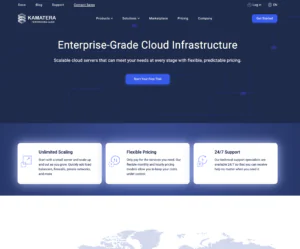
Are you looking for a budget-friendly SSD VPS solution with no upfront costs and no commitment? I recommend Kamatera as the cheapest SSD VPS hosting provider that allows you to pay hourly or by the minute and only for what you use. Better yet, you can use its services entirely free of charge within the 30-day trial period.
- Overall Score: 4.9
- Performance: 4.9
- Scalability: 5.0
- User-Friendly: 4.8
- Features: 4.8
- Pricing: 5.0
What sets Kamatera apart from all remaining SSD VPS providers is its flexibility. Combined with the pay-as-you-go system, it can generate one of the most affordable prices on the market. Its rates start very low, and you’ll always pay specifically for the resources you need, meaning you won’t spend too much money if you need a single vCPU.
Research Findings:
- Performance: Kamatera utilizes 13 global data centers and impressive hardware, including Intel Xeon processors and SSD SAN arrays, thus delivering enterprise-class speed, reliability, and a 99.95% uptime guarantee.
- Scalability: With Kamatera, you can choose from four types of CPUs and upgrade to 40 dedicated vCPUs, 524288MB RAM, 4000GB SSD storage, 4 public IPs, up to 100 cPanel Premier accounts, Plesk Web Host unlimited domains, and extended daily backup service.
- User-Friendly: Kamatera’s user interface is pretty straightforward and easy to navigate. You can also expect personal assistance – live technical support around the clock, 24 hours a day, 7-days a week, even without the managed support add-on.
- Features: You’ll get the absolute freedom to configure, scale up or down and add new components as required, along with unlimited storage, root access, a proprietary API, as many databases as you wish, and more.
- Pricing: Kamatera provides fully customizable and scalable cloud VPS with up to 1174 various cloud server setup configurations, starting at $0.005/hour or $4/month.
Pros & Cons
- Incredibly easy to scale your resource levels up or down on-demand
- One of the cheapest SSD VPS offers on the market (monthly and hourly billing available)
- A quick 24/7 customer support department (human-backed live chat, phone, and email systems)
- Managed services are offered as a premium add-on
- Requires technical know-how on the unmanaged SSD VPS (fortunately, customer support can help you out)


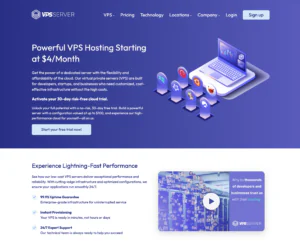
Vpsserver.com’s SSD VPS Hosting is geared toward users who want faster storage performance and more consistent resource allocation than shared hosting can provide. It fits developers, agencies, and small to mid-sized businesses that run dynamic sites, multiple projects, or applications where disk speed and stability matter. SSD-backed storage helps improve boot times, database responsiveness, and page generation for CMS-driven websites. While it’s not the simplest option for complete beginners, it’s a strong value for users who are comfortable managing a VPS environment or who plan to grow into more demanding workloads over time.
Rating Overview
- Overall Score: 4.5
- Performance: 4.6
- Support: 4.4
- Security: 4.5
- Pricing: 4.3
- Ease of Use: 4.2
Detailed Analysis
Performance: SSD storage improves I/O-heavy workloads like databases, caching, and frequent file operations. Resource isolation typically delivers steadier speeds than shared hosting during traffic spikes. For heavier apps, choosing sufficient RAM and CPU remains critical.
Support: Support is generally responsive for setup guidance and common VPS issues. More advanced tuning or stack-specific troubleshooting can take longer depending on complexity. Managed options (if selected) reduce operational burden.
Security: Core VPS security is strong when paired with firewalls, controlled access, and regular patching. Automated backups and DDoS protection are important additions, but coverage can vary by plan. Users should still harden services and follow basic server hygiene.
Pricing: Pricing usually reflects the SSD performance and dedicated resource model. It’s higher than shared hosting, but cost-effective for sites that need stability and speed. Scaling is typically straightforward, though upgrades can increase monthly spend quickly.
Ease of Use: Control panels and templates help simplify deployment, but VPS hosting still requires some technical comfort. Beginners may need time to learn server basics. Once configured, ongoing management is manageable with good documentation.
Pros and Cons
Fast SSD storage for better site responsiveness
Dedicated resources improve consistency under load
Scalable plans for growing projects
Good security foundation with VPS-level isolation
Suitable for databases and dynamic apps
Requires technical knowledge for best results
Managed features may cost extra
Over-provisioning can raise costs
-
Best Value for Money 2026
-
Editor's Choice 2026
-
Most Recommened PHP Hosting 2026
-
Top 5 UK Web Hosting 2026
-
Top 5 Europe Web Hosting 2026

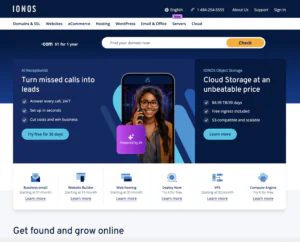
With six different SSD VPS plans to choose from and easily scalable services, IONOS is one of the best web hosting providers for users looking for flexibility. Also, it’s compatible with multiple Linux distros and Windows operating systems, and with the full root access it gives you, you can use the one you like and know best.

- Overall Score: 3.9
- Pricing: 3.9
- Features: 3.5
- Performance: 4.3
- Support: 4.0
- User Friendly: 3.8
Detailed Analysis:
- Pricing: All of IONOS’ six SSD VPS plans come with a 30-day money-back guarantee. The cheapest option costs $2/month and includes one vCPU core, 1GB of RAM, and 10GB of storage.
- Features: Some of the features that IONOS offers include full root access, full virtualization, unlimited traffic of up to 1 Gbit/s, NVMe storage, firewall management, IPS/IDS, an SSL certificate, server snapshots, DDoS protection, dedicated resources, Linux, CentOS, Debian, Rocky Linux, Ubuntu, Windows Server 2019, Windows Server 2022, and more.
- Performance: All of IONOS’ SSD VPS plans come with a 99.9% uptime guarantee. Also, IONOS has data centers in Las Vegas, Nevada; Newark, New Jersey; Lenexa, Kansas; Frankfurt, Berlin, Paris, London, and Logroño, giving you a wide choice of locations for optimal performance.
- Support: As an IONOS user, you’ll receive 24/7 customer support via live chat and phone. Also, you can learn a lot about IONOS and its services via the written guides and tutorials it offers on its website.
- User Friendly: IONOS offers something for both beginners and pros. Namely, it is very easy to use and comes with its own custom cloud control panel and a “Deploy Now” feature, via which you can get your website online with three quick steps.
Pros & Cons
- Affordable prices that come with powerful features.
- 30-day money-back guarantee.
- Compatible with both Linux and Windows instances.
- Not all users get phone support (but live chat is available for everyone).

-
Best Overall Hosting 2026
-
Users Top Choice 2026
-
Most Recommended NodeJS 2026
-
Best AI App Builder 2026
-
Top 5 Europe Web Hosting 2026

Hostinger is an excellent all-in-one web host that comes with lightning-fast SSD VPS services, and it offers them at super affordable prices. With this provider, you’ll get everything you need, from a website builder to backups and AI assistance, in one place. So, if you want to get the best bang for your buck, Hostinger is your best bet.

- Overall Score: 4.6
- Pricing: 4.6
- Features: 4.6
- Performance: 4.6
- Support: 4.7
- User Friendly: 4.7
Detailed Analysis:
- Pricing: Hostinger offers four SSD VPS hosting plans, and all of them are eligible for 30-day money-back guarantees. The cheapest option, called KVM 1, costs $5.99/month (on an annual basis) and includes 4GB of RAM, 50GB of NVMe storage, one vCPU core, 1TB of bandwidth, weekly backups, full root access, and more.
- Features: All of Hostinger’s VPS plans come with dedicated IPv6 IPs, IPv4 & IPv6 support, snapshots, multiple Linux OS options, BitNinja security, automated weekly backups, Wanguard DDoS filtering, an AI-powered firewall, full root access, and more.
- Performance: This web hosting provider has a fiber-connected infrastructure that offers 300Mb/s speeds and uses AMD EPYC processors and fast-paced NVMe storage on all its servers. It also comes with a 99.9% uptime guarantee and an industry-standard KVM virtualization platform.
- Support: Hostinger offers helpful and responsive customer support, available to you 24/7 via live chat and email. Also, you’ll find informative guides, tutorials, and articles on Hostinger’s websites.
- User Friendly: Hostinger has an AI-powered website builder that will build your whole website based on your preferences. Also, it offers user-friendly control panels and has an intuitive hosting dashboard. Moreover, the provider gives you guided setups, an AI assistant, and one-click installs.
Pros & Cons
- Excellent blend of affordability, power, and features.
- Ideal for beginners with a plethora of beginner-friendly tools and services.
- NVMe storage and a 300Mb/s fiber-connected infrastructure.
- The AI website builder is a bit slow (but it helps a lot since it creates a whole website for you).

-
Best Web Hosting 2026
-
Top 5 Europe Web Hosting 2026
-
Top 5 Germany Web Hosting 2026
-
Top 10 Reseller Hosting 2026
-
Top 5 USA Web Hosting 2025

HostArmada’s SSD VPS Hosting focuses on delivering strong performance with a more guided, user-friendly experience—making it attractive to businesses and site owners who want VPS power without feeling fully on their own. With SSD storage at the core, HostArmada is well-suited for WordPress, small e-commerce stores, and business sites that need faster load times and improved reliability versus shared hosting. It’s a practical option for users who prefer a smoother onboarding experience, helpful support, and security features that reduce day-to-day maintenance pressure.
Rating Overview
- Overall Score: 4.6
- Performance: 4.6
- Support: 4.6
- Security: 4.6
- Pricing: 4.4
- Ease of Use: 4.6
Detailed Analysis
Performance: SSD storage supports faster database reads/writes and quicker page loads for dynamic sites. VPS resource allocation improves stability during traffic bursts. Performance remains best when paired with caching and right-sized server specs.
Support: Support is a key strength, especially for users transitioning from shared hosting. Help with migrations, configuration, and common issues reduces friction. More advanced custom stacks may still require user input, but assistance is typically reliable.
Security: HostArmada generally provides a solid security posture with SSL, firewalls, monitoring, and backup options. VPS isolation reduces cross-site risk compared to shared hosting. Users should still keep apps updated and follow least-privilege access practices.
Pricing: The pricing tends to sit above bargain VPS providers, but it often includes more guidance and support value. It’s a good fit when time-savings matter as much as raw cost. Long-term value improves if you leverage included security and support.
Ease of Use: The platform is designed to be approachable, with cleaner setup flows and management tools. Many users will find it easier than a DIY VPS environment. It’s a strong choice for site owners who want performance improvements without deep sysadmin work.
Pros and Cons
SSD storage boosts speed for dynamic sites
Strong support for setup, migration, and troubleshooting
Solid baseline security features for VPS users
More beginner-friendly VPS experience
Good stability under moderate traffic spikes
Pricing can be higher than DIY VPS providers
Advanced customizations may need technical experience
Best value often depends on longer-term billing
-
Top 25 Offshore Hosting 2026

Hosting.com’s SSD VPS targets growing websites and applications that need consistent speed without jumping to dedicated hardware. With solid-state storage across all plans, isolated CPU/RAM, and straightforward resource upgrades, it suits agencies, SaaS prototypes, busy blogs, and lightweight ecommerce. The value pitch centers on predictable pricing, a tidy control panel, and optional managed help—giving newcomers a soft landing while leaving room for developers to customize.
Rating Overview
Overall Score: 4.5
Performance: 4.6
Support: 4.5
Security: 4.5
Pricing: 4.4
Ease of Use: 4.6
Detailed Analysis
Performance: SSD-backed storage keeps read/write latency low and improves database responsiveness under load. Modern virtualization and recent kernel builds help deliver steady CPU performance during peak activity. Vertical scaling lets you add cores and memory with minimal downtime as traffic climbs.
Support: 24/7 chat and tickets handle common tasks such as SSL, DNS, and migration questions with clear steps. The team is comfortable with popular stacks and offers practical tuning advice for PHP, Node, and Nginx. Deeply customized environments may require escalation, which can add a little turnaround time.
Security: Baseline protections include network firewalls, DDoS filtering, and frequent security patches. Isolated instances reduce noisy-neighbor and lateral movement risk across projects. Optional WAF and backup scheduling strengthen posture for sites processing user data or payments.
Pricing: Plans are transparent, with bandwidth and storage tiers that map cleanly to growth stages. Included essentials like snapshots and free SSL cut reliance on third-party add-ons. High-core or RAM-heavy builds can approach premium price territory, so capacity planning matters.
Ease of Use: The control panel surfaces the right levers—console access, backups, DNS, and monitoring—without clutter. One-click installers and guided wizards shorten time to first deploy for non-experts. Developers retain SSH, root access, and API options for automation and CI/CD.
Pros and Cons
Fast SSD storage and responsive I/O
Clean scaling path with transparent resource tiers
Helpful 24/7 support for common tasks
Snapshots and free SSL included by default
Developer-friendly with SSH, root, and API
Escalations needed for complex custom stacks
Premium pricing at very high resource levels
Limited native add-ons for niche workloads
-
Best Dedicated Hosting Provider 2026
-
Best Windows Hosting Provider 2026
-
Top 5 France Web Hosting 2026
-
Top 10 Website Builder 2026
-
Top 10 Web Hosting 2026

SSD & NVMe storage, built-in security updates, free SSLs, unlimited bandwidth, and excellent performance are only some of the features included in UltaHost’s feature-rich plans. So, if you want something powerful that also uses the fastest storage systems on the market, you should consider trying out this provider.

- Overall Score: 4.9
- Pricing: 4.9
- Features: 4.8
- Performance: 4.9
- Support: 4.9
- User Friendly: 4.9
Detailed Analysis:
- Pricing: UltaHost allows you to choose your SSD VPS plan based on the control panel you like most. The cheapest option is VPS hosting with Hestia & CyberPanel, which starts at $5.50/month and includes 30GB of NVMe storage, a managed server, one CPU core, 1GB of RAM, and one dedicated IPv4 IP.
- Features: You’ll be able to enjoy features like BitNinja security, SSH & SFTP access, IPv4 addresses, staging environment, a free domain transfer, free backups, free SSL certificates, unlimited bandwidth, auto-healing, dedicated firewalls, fast-paced NVMe storage, and more.
- Performance: UltaHost uses fast-paced SSD & NVMe storage, scalable DDR5 RAM, and high-quality hardware on all its VPS servers. It also comes with a 99.99% uptime guarantee and allows you to get a CDN add-on.
- Support: This web host provides 24/7 customer support via live chat, phone, and email. In addition, it has a knowledge base filled with guides that you can use, as well as support add-ons that you can purchase separately.
- User Friendly: UltaHost is compatible with Hestia, CyberPanel, Plesk, and cPanel control panels, which are some of the best on the market. Also, you’ll get managed services, meaning that all the technical aspects of your hosting will be taken care of by UltaHost.
Pros & Cons
- Feature-rich plans with unlimited bandwidth.
- A 99.99% uptime guarantee and NVMe & SSD storage on all plans.
- 30-day money-back guarantee.
- You’ll pay more when you renew (but even the higher prices are worth the features you’ll get).

-
Best Linux Hosting Provider 2026
-
Top 5 USA Web Hosting 2026
-
Top 10 Reseller Hosting 2026
-
Top 10 Windows Hosting 2026
-
Great Support 2026

Rating Overview:
- Overall Score: 4.6
- Features: 4.7
- Reliability: 4.6
- User-Friendly: 4.5
- Support: 4.5
- Pricing: 4.6
Interserver’s SSD VPS hosting combines speed, reliability, and flexibility, offering an exceptional solution for businesses and developers. With powerful SSD storage and customizable plans, it ensures high performance and scalability for various hosting needs.
Detailed Analysis:
- Features: Interserver’s SSD VPS hosting provides cutting-edge features, including full root access, multiple Linux and Windows OS options, and scalable resources. Its fast SSD storage significantly improves read/write speeds, ensuring optimal performance for demanding applications.
- Reliability: With a 99.9% uptime guarantee, Interserver ensures uninterrupted services. Its data centers are equipped with redundant power and cooling systems, guaranteeing consistent performance and reliability.
- User-Friendliness: The intuitive VPS control panel simplifies server management. Beginners and experienced users alike benefit from features like instant upgrades, pre-configured templates, and easy monitoring tools.
- Support: Interserver offers professional 24/7 support via live chat, email, and phone. The knowledgeable team quickly addresses technical concerns, ensuring smooth operations for its users.
- Pricing: Known for its affordable and transparent pricing, Interserver allows users to pay only for the resources they need. There are no hidden fees, and the flexible billing structure is ideal for various budgets.
Pros and Cons:
- Fast SSD storage for superior performance
- Scalable plans tailored to user needs
- Full root access for advanced configurations
- Transparent and affordable pricing
- Reliable 99.9% uptime guarantee
- Additional costs for premium support services
- Limited advanced features for enterprise-level hosting
-
Best Reseller Hosting Provider 2026
-
Top 5 Australia Web Hosting 2026
-
Top 5 UK Web Hosting 2026
-
Top 10 Windows Hosting 2026
-
Top 10 VPS Hosting 2026

Verpex’s SSD VPS line focuses on fast, consistent disk performance and predictable resources for developers, agencies, and growing businesses. With solid-state storage underpinning every plan, it suits projects that outgrow shared hosting yet aren’t ready for the complexity or cost of dedicated hardware. The value proposition centers on quick provisioning, straightforward scaling, and a manageable learning curve for users who want control without juggling a full bare-metal stack. It’s a balanced option for hosting web apps, storefronts, and high-traffic sites that need low-latency I/O and dependable uptime.
Rating Overview
- Overall Score: 4.6
- Performance: 4.7
- Support: 4.6
- Security: 4.6
- Pricing: 4.5
- Ease of Use: 4.7
Detailed Analysis
Performance: SSD storage keeps read/write times snappy and helps dynamic sites feel responsive under load. Virtualization is tuned for fast boot times and smooth scaling when you add CPU or RAM. Network capacity is ample for typical production workloads with room to burst during peaks.
Support: Response quality is consistently helpful, with clear guidance on VPS tasks like OS reinstalls and DNS changes. Technicians are comfortable bridging the gap between managed and DIY, which reduces friction for semi-managed users. Documentation covers common scenarios so you’re rarely starting from zero.
Security: Baseline hardening practices are encouraged, and tools like firewalls, snapshots, and backups are easy to incorporate. Patch management is straightforward whether you automate updates or handle them manually. Optional layers—such as DDoS filtering or WAF at the edge—add depth as projects scale.
Pricing: Plans are tiered so you can start small and expand as usage grows, keeping cost aligned with performance needs. Add-ons like backups, control panels, and premium bandwidth are reasonably priced but can add up, so budgeting ahead helps. The overall value remains strong for SSD-backed compute and storage.
Ease of Use: The dashboard makes reboots, reinstalls, and console access simple, reducing dependence on the command line. Prebuilt OS templates accelerate deployment and shorten time to first deploy. Clear resource metrics help you right-size your instance without guesswork.
Pros and Cons
Fast SSD storage delivers low-latency I/O
Clean control panel with quick provisioning
Flexible scaling across CPU, RAM, and storage
Sensible defaults and practical documentation
Good balance of managed help and control
Add-ons like backups and panels can raise total cost
Full root access still requires admin familiarity
Higher tiers may be needed for sustained high I/O
SSD VPS vs HDD VPS Hosting: Key Differences
| Feature | SSD VPS Hosting | HDD VPS Hosting |
| Storage Speed | Fast (especially with NVMe) | Slow read/write operations |
| Performance | High I/O for dynamic sites and apps | Sluggish under heavy load |
| Reliability | More stable and durable | Mechanical failures more common |
| Cost | Slightly higher | Lower, but outdated |
| Best For | Databases, eCommerce, resource-heavy apps | Basic hosting with minimal performance needs |
Conclusion: SSD VPS is the better choice for modern websites and apps. HDD VPS may be cheaper, but lacks the speed and reliability users expect in 2025.
Use Cases for SSD VPS Hosting
- ECommerce Platforms: Fast SSDs improve cart performance, load speed, and customer experience.
- Web Developers: Use root access for testing, staging, or deploying full-stack apps with complete control.
- SaaS Projects: Host your backend, APIs, or microservices with reliable I/O and minimal latency.
- Media-Rich Websites: Handle image galleries, downloads, and video hosting with faster delivery.
- Gaming Servers: Low-latency performance for hosting game servers and control panels.
Why Trust Our Recommendations?
We tested SSD VPS plans by deploying WordPress, Node.js, and database-driven apps across multiple providers. Benchmarks included server response time, IOPS, disk speed, and uptime tracking.
We also evaluated user interfaces, provisioning speed, snapshot tools, OS flexibility, and support quality. Only providers offering real SSD (not cached HDDs), consistent performance, and helpful documentation made our final list.
How We Test and Rank
Our team set up test environments on each VPS host using real-world apps and simulated load conditions. We used tools like GTmetrix, Pingdom, and fio benchmarks to measure performance.
We scored providers on six key factors: SSD speed (SATA vs NVMe), CPU/RAM allocation, ease of use, uptime, scalability, and support. VPS hosts that combined speed, control, and value were ranked highest.
Best SSD VPS Hosting: Final Recommendations
SSD VPS hosting is a smart choice for developers, small businesses, and performance-focused websites. It delivers more speed, reliability, and control than shared or HDD VPS plans—without the complexity or cost of dedicated servers.
Choose a host with true SSD or NVMe drives, flexible server configs, and helpful tools like snapshots and firewalls. Whether you’re running a dynamic site or building a complex app, SSD VPS gives you the performance foundation to scale confidently.